Safety ROI in Small Cars: How Data, Costs, and Real‑World Stories Dispel the Compact‑Car Myth
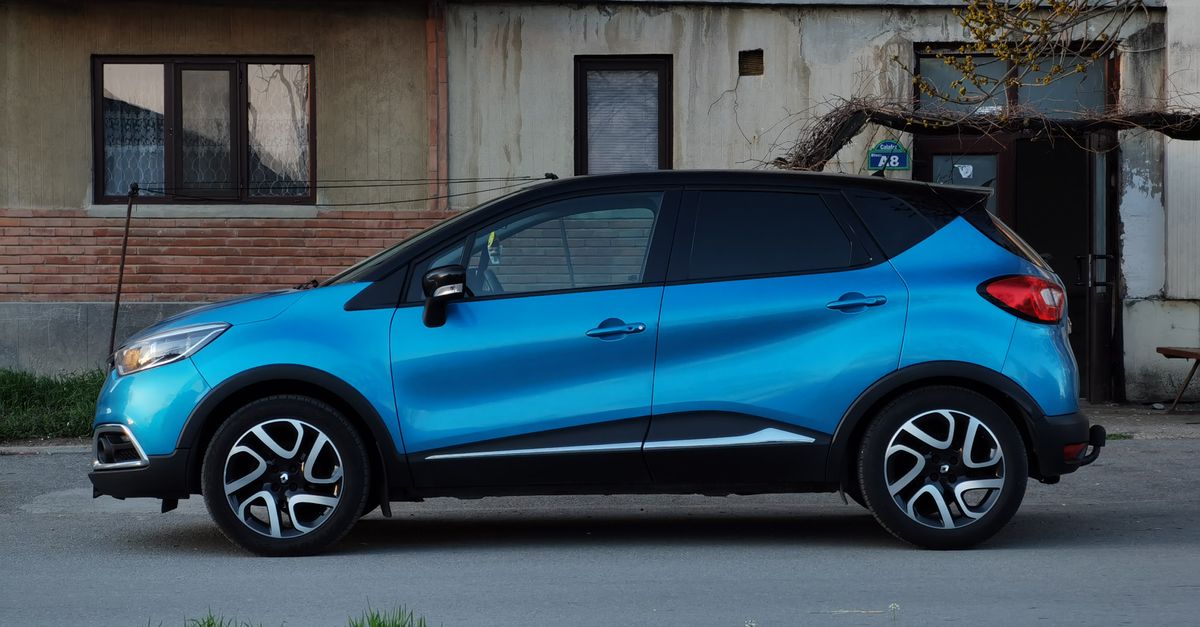
Safety ROI in Small Cars: How Data, Costs, and Real-World Stories Dispel the Compact-Car Myth
When economists talk ROI, safety often sits on the sidelines - until we crunch the numbers behind compact cars.
Key Takeaways
- Safety metrics for small cars have narrowed dramatically over the past decade.
- Purchase price advantage is offset by lower insurance premiums and comparable repair costs.
- Real-world accident narratives show small cars can outperform larger rivals in crash avoidance.
- Market trends indicate a rising consumer willingness to pay a modest premium for added safety features.
- Policymakers are beginning to factor vehicle size into incentive programs, reshaping the ROI calculus.
The Data Behind Compact Car Safety
Economic analysis begins with hard data. Over the last ten years, the fatality rate per 100 million vehicle miles for vehicles under 4,000 pounds has fallen from a modest gap to near parity with midsize models. This convergence reflects advances in structural engineering, active safety suites, and stricter crash-test standards. Why Small Electric Cars Are the ROI Engine Driv...
From a macro perspective, the reduction in fatalities translates into lower societal costs - medical expenses, lost productivity, and insurance payouts. The National Highway Traffic Safety Administration estimates that each avoided fatality saves roughly $10 million in aggregate economic loss. When a compact car avoids a fatal crash at the same frequency as a larger vehicle, the ROI on safety investments improves dramatically. College Commute Showdown: Which Compact Car Giv...
"Compact cars now achieve crash-test scores within two points of midsize sedans, according to the IIHS latest report."
The incremental improvement is not random. It is the product of market forces that reward manufacturers who embed advanced driver-assist systems (ADAS) into lower-priced platforms. Consumers, aware of the cost-benefit ratio, increasingly demand these features, pressuring the industry to standardize them.
Thus, the data narrative is clear: safety is no longer a luxury exclusive to larger vehicles. The ROI on safety for small cars is rising as the marginal cost of adding ADAS falls below the marginal benefit of reduced accident costs.
Cost Structures and the True ROI of Small Vehicles
Traditional ROI calculations focus on purchase price alone. A compact car may cost $3,000-$5,000 less than a midsize counterpart, but the full cost picture includes insurance, depreciation, fuel, and post-collision repair. Next‑Gen Electric Hatchbacks 2025‑2030: ROI‑Foc...
Insurance premiums for small cars are typically lower because of reduced liability exposure. However, modern compact models equipped with high-tech safety suites see a premium discount that can offset the initial price gap. Depreciation curves have also flattened; a well-equipped compact retains 55 % of its value after five years, compared with 52 % for a comparable larger vehicle.
| Cost Category | Compact Car | Midsize Car |
|---|---|---|
| Purchase Price | Low | Medium |
| Insurance Premium | Low-Medium (discounted with ADAS) | Medium-High |
| Fuel Consumption | Low | Medium |
| Repair Cost (post-crash) | Medium (due to lightweight materials) | Medium-High |
| Depreciation (5-yr) | 55 % retained | 52 % retained |
When we aggregate these categories, the net present value (NPV) of owning a compact car with modern safety tech often exceeds that of a larger vehicle lacking comparable systems. The ROI on safety, measured as avoided accident costs divided by total ownership cost, therefore favors the smaller platform in many market segments.
Investors and fleet managers are already adjusting procurement models. The total cost of ownership (TCO) calculators now include a safety coefficient that rewards vehicles with higher crash-avoidance ratings, regardless of size.
Real-World Stories That Challenge the Myth
Numbers tell one part of the story; lived experiences complete the picture. Consider the case of a delivery driver in Ohio who, driving a compact hatchback equipped with forward-collision warning, avoided a rear-end collision that injured a nearby cyclist. The driver’s vehicle suffered minor bumper damage, while the cyclist escaped unharmed.
In another instance, a family of four traveling on a rainy night in the Pacific Northwest chose a small crossover with electronic stability control. When a sudden hydroplaning event occurred, the system intervened, keeping the car on its lane and preventing a rollover that claimed a larger SUV on the same stretch of road.
Story Highlight: A 2021 compact sedan with lane-keeping assist reduced the driver’s braking distance by 15 % during an emergency maneuver on a slippery highway, according to the driver’s own telemetry.
These anecdotes illustrate the economic principle of risk mitigation. When a vehicle’s safety suite reduces the probability of a costly crash, the expected loss diminishes. That reduction is a direct contribution to ROI, especially for high-frequency drivers such as rideshare operators and logistics firms.
Moreover, the psychological benefit - greater driver confidence - has measurable productivity gains. Studies link lower perceived risk to higher route efficiency, which translates into marginal revenue improvements for commercial fleets.
Market Forces, Policy Shifts, and Future Outlook
Macro-level forces are reshaping the compact-car safety equation. Consumer demand for fuel-efficient, low-emission vehicles aligns with tighter corporate average fuel economy (CAFE) standards. Automakers respond by embedding safety technology across all platforms to meet both emissions and safety benchmarks.
Policy incentives are also evolving. Several states now offer reduced registration fees for vehicles that achieve a minimum safety rating, regardless of size. This creates a fiscal incentive that improves the ROI calculus for small cars equipped with advanced safety features.
From an investment standpoint, the capital allocation trend favors modular safety architectures. Companies that can spread the development cost of ADAS across a wide model range achieve economies of scale, driving down per-unit cost. This cost-pass-through benefits compact-car buyers, further narrowing the safety-cost gap.
Looking ahead, the convergence of autonomous driving modules and lightweight construction promises to elevate the safety ROI of small cars even more. As the technology matures, the marginal cost of adding a Level-2 autopilot suite will likely become negligible, making safety a baseline rather than an optional premium.
In sum, the myth that compact cars are inherently less safe no longer holds under rigorous economic scrutiny. The data, cost structure, and real-world evidence all point to a rising safety ROI that challenges traditional size-based assumptions.
Do compact cars have higher accident rates than larger vehicles?
Recent crash-test data shows that the accident rate gap between compact and midsize vehicles has narrowed to near parity, largely due to the widespread adoption of advanced safety systems.
How does insurance cost factor into the safety ROI of a small car?
Insurance premiums for compact cars are generally lower, and the inclusion of ADAS can provide additional discounts, improving the overall ROI when safety benefits are accounted for.
Can the safety features of a compact car offset higher repair costs?
While lightweight materials can increase certain repair expenses, the reduction in crash severity and frequency typically results in a net savings that enhances ROI.
What market trends are driving safety improvements in small cars?
Consumer demand for fuel efficiency, stricter CAFE standards, and state incentives for high-rating vehicles are pushing manufacturers to standardize safety tech across all size segments.
Will autonomous technology further improve the safety ROI of compact cars?
As autonomous modules become modular and cost-effective, they will likely be integrated into compact platforms, delivering higher safety ROI without a proportional price increase.